3.0 twin-turbo straight six · G80 M3, G82 M4, G87 M2, F97 X3 M, F98 X4 M
The S58 is a 3.0 litre straight six with two turbochargers and a 9.3:1 compression ratio. Double VANOS and Valvetronic variable valve lift control the camshafts and the valve lift, and two high-pressure fuel pumps feed the direct injectors at up to 350 bar. It's paired with the ZF 8HP76 eight-speed automatic.
Compared with the S55 it has a keyway crank hub, so the old crank hub slipping issue has gone, noticeably thicker conrods, and lower compression that takes more boost. The factory turbos are, if anything, oversized at stock power.
Development on the S58 has moved fast: engine builds, gearbox upgrades, fuelling and turbo packages have all come on hugely. Even the standard BMW ECU can control over 1,500 BHP, as it does on our own shop G80.
- Layout
- 3.0 litre straight six, twin turbo
- Compression
- 9.3:1
- Valvetrain
- Double VANOS, Valvetronic
- Fuel system
- 2 high-pressure pumps, 350 bar
- Gearbox
- ZF 8HP76 eight-speed
- Stock power
- 500 to 515 BHP
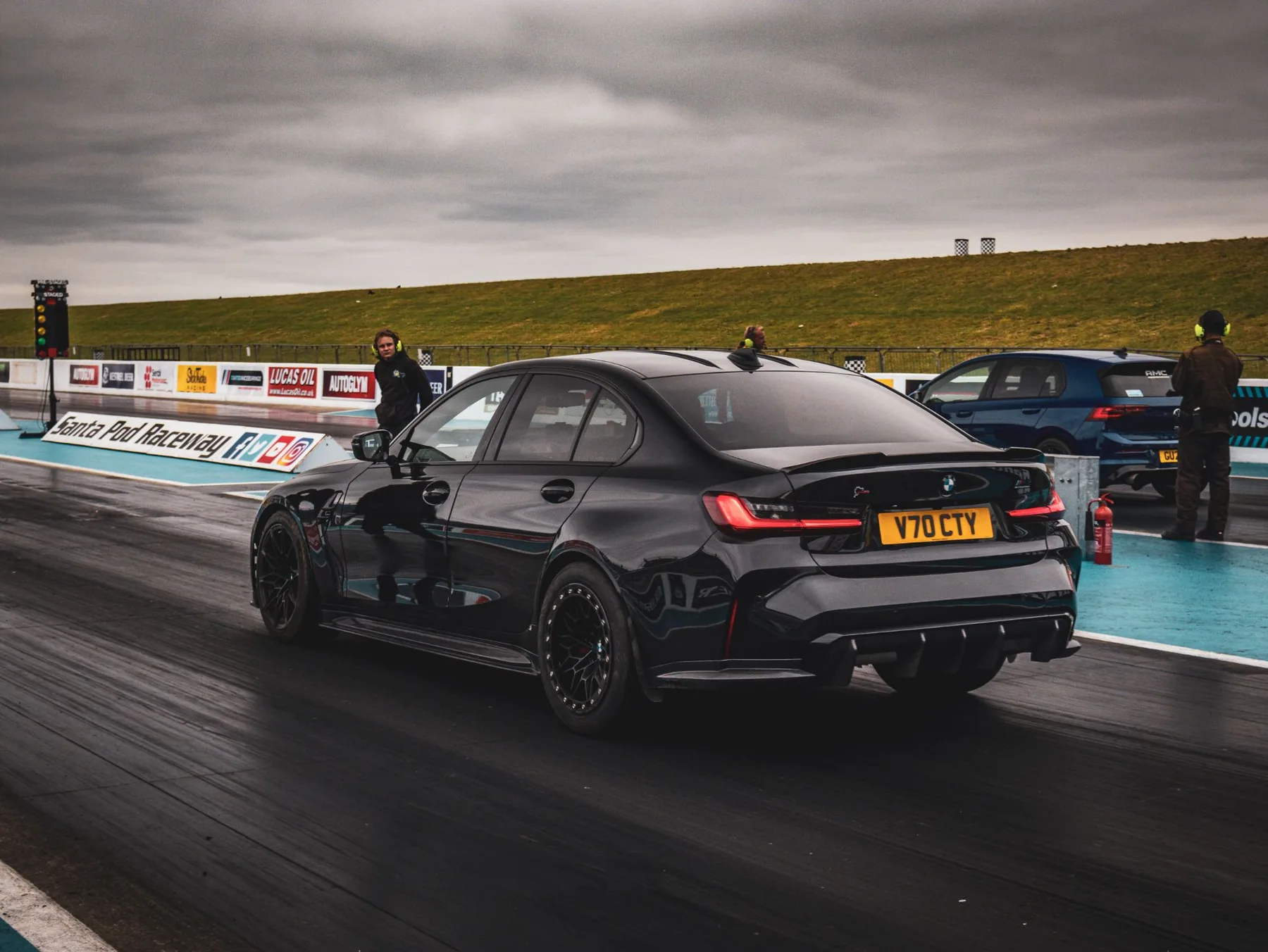
Our two development S58s
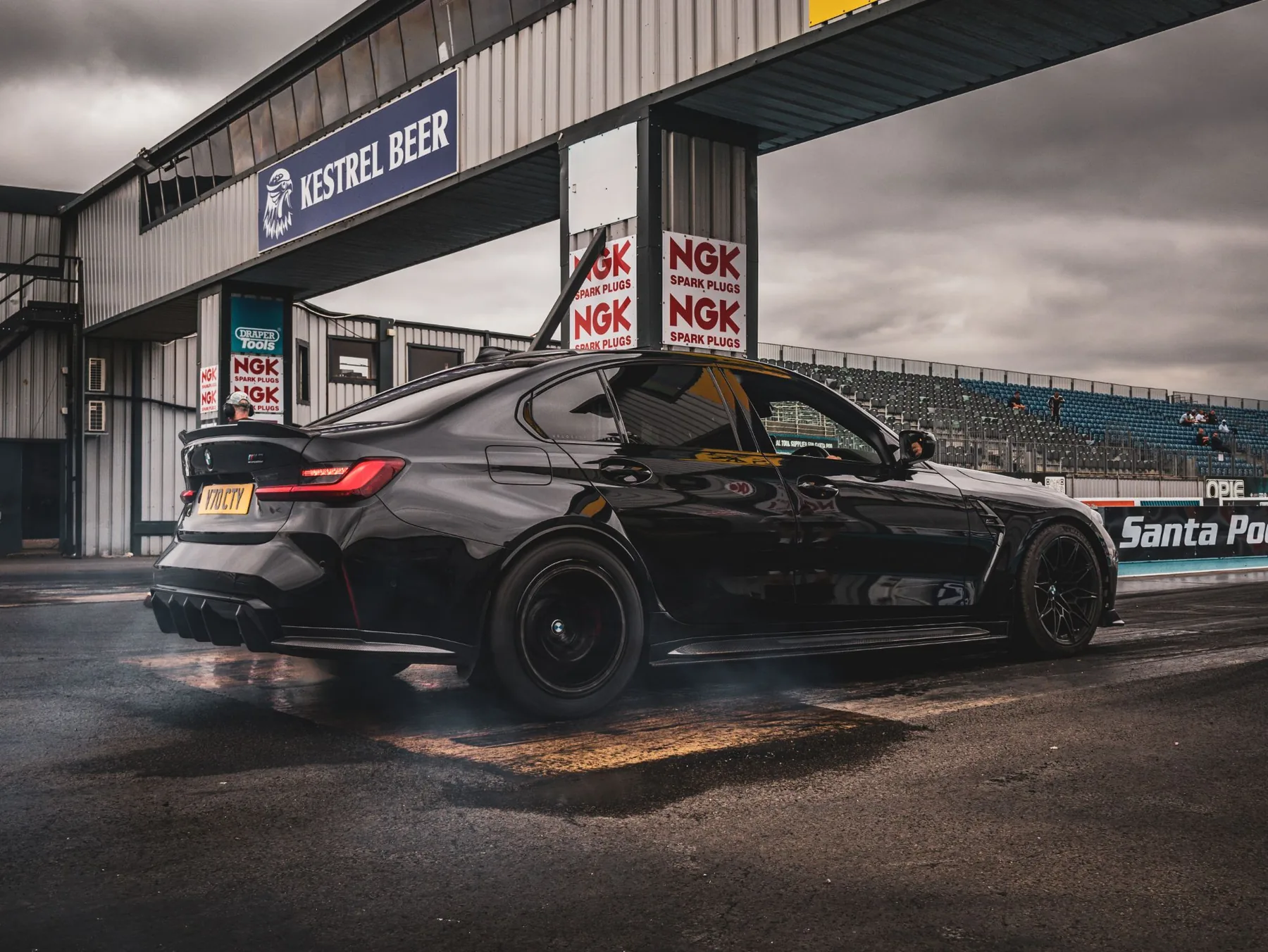
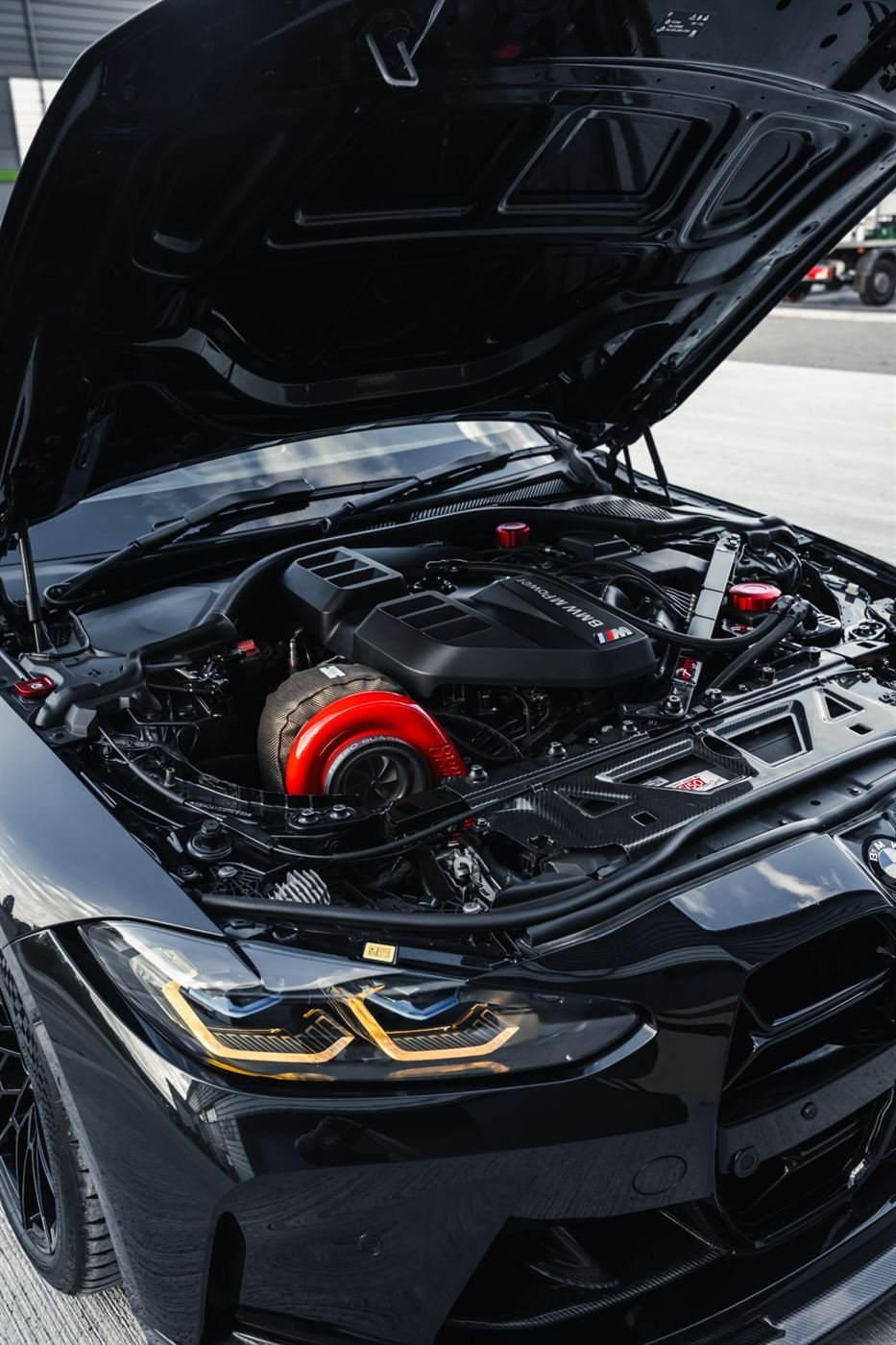
Every S58 package is proven on one of our own cars before we sell it. One shows how far the standard engine and turbos can be taken. The other shows the S58 at its very limits.
Our F97 X3 M
800 BHP
The same S58 as our M3, in a heavier and less aerodynamic car. We set out to make it as quick as an M3 or M5 while keeping it an easy everyday SUV, and it still runs its standard engine and turbos, so it shows exactly how far a standard S58 can be taken.
- Standard engine and turbos
- VT gearbox map
- Lowering springs
- Rear diff bolt upgrade
- Single midpipe
- Sports cat downpipes
- Flex fuel
- Standard Coming from the G80, the first thing we noticed was how much the extra weight and aerodynamics cost: it was 25 to 30% slower in acceleration. The gearbox shifted softly, the ride was surprisingly harsh and, like every modern M car, it was too quiet.
- Gearbox map Quick, decisive shifts, while staying smooth enough for everyday driving.
- Lowering springs A more purposeful stance and, just as important, a far better ride: the springs cured the harshness of the standard suspension.
- Rear diff bolt The X3 M's rear diff bolt is a known weak point. We've seen snapped, sheared and bent bolts first hand, and customers' diffs damaged when one fails. The upgrade kit takes that risk away.
- Single midpipe Real M Power sound, without going so far that it becomes antisocial.
- VT675 The perfect daily X3 M. Quicker than a standard M3 or M5 in acceleration, a softer ride, a responsive gearbox that is still easy to live with, and no risk of a diff bolt failure.
- VT700 to VT800 Being a tuning company, we kept going. Sports cat downpipes and flex fuel add another 125 BHP, and with ethanol mixed into the main tank it makes an instant 800 BHP: an 800 BHP SUV that is still used every day.
- VT1100 Nothing stops an X3 M going all the way. We've built a customer's X3 M on our VT1100 package, with a built engine, a built gearbox, Mosselman hybrid turbos and port injection.
Our G80 M3
1,500+ BHP
Developed step by step from a basic tune to over 1,500 BHP. Because we have taken this car through every level of tuning, whatever you want from your S58, we can not only do it: we have already done it on our own car.
- VT1700 engine
- Precision 7680 single turbo
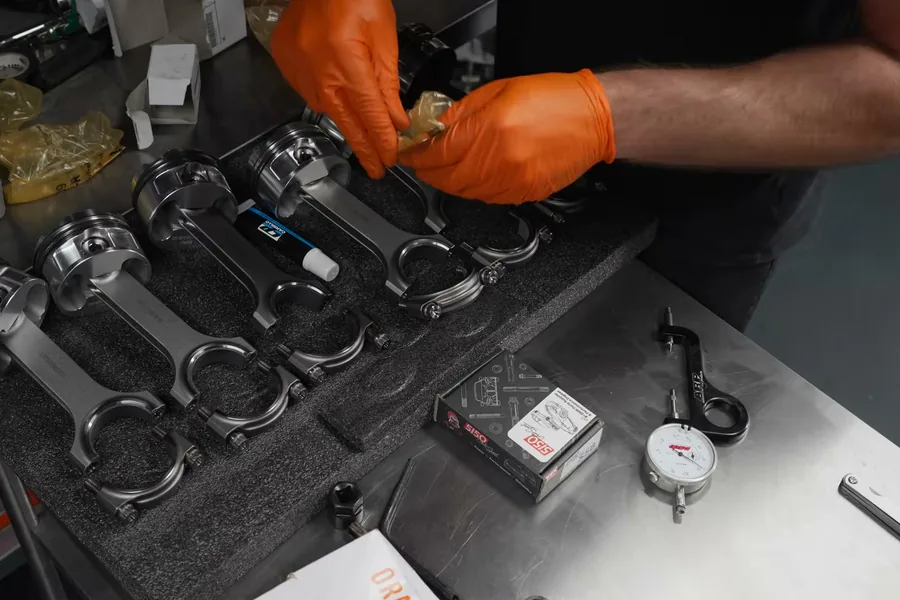
- Kotte stage 2 gearbox, built in-house
- Standard BMW ECU
- VT650 ECU tune only.
- VT700 Exhaust modifications added.
- VT800 Flex fuel added, close to the limit of the standard fuel system.
- VT900 Over 900 BHP on the standard turbos with no port injection, just flex fuel and methanol. It ran the UK's fastest 100-200 and quarter mile for a car on standard turbos, and featured on Officially Gassed while still on its standard engine and turbos. 4.3–4.5 sec 100-200 · 9.4 sec 1/4 mile
- Mosselman hybrids We tested several hybrid turbos and found the Mosselman hybrids the best. With them fitted we took the standard engine to 1,020 BHP and ran it there for six months, to prove the mapping and give us complete confidence in customers' cars at 900 BHP. Past 900 BHP the standard gearbox had problems in sixth gear, so we then built the engine and the gearbox. 3.6–3.8 sec 100-200
- 1,100 BHP Mosselman hybrid turbos, the right fuel and a strong built engine took it to 1,100 BHP, again setting exceptional 100-200 and quarter mile times.
- Precision 7680 Having found the limits of the Mosselman hybrids, we made the move to a Precision 7680 single turbo, running on our VT1300 engine.
- 1,500 BHP Once we had gathered enough data on the turbo and the engine, we moved to our VT1700 engine, with upgraded cams and valves, fire rings and head studs, alongside the Precision 7680 turbo and the Kotte stage 2 gearbox we built in-house. 2.8–3.0 sec 100-200
Tested in every environment: on the Nürburgring, at Santa Pod and on the one-mile straight at Race Wars. Our M3 has performed over 150 launch controls and exceeded 200 mph in testing.
Service & health
How we look after an S58: the service intervals we recommend on the cars we look after, standard or tuned, and the habits that keep it healthy.
- 1,200 miles Running-in check: engine oil and rear diff oil
- Every 5,000 miles Engine oil and filter: Motul 8100 Power 5W-40, 7 litres
- Every 10,000 miles Air filters
- Every 15,000 miles Spark plugs on a daily car (every 10,000 if it sees race use)
- Every 50,000 miles Gearbox oil
- Every 50,000 miles Rear diff and transfer case oil (xDrive)
Engine oil
- We recommend
- Every 5,000 miles, and after any track or drag day.
Why 5W-40: the 40 means it stays thicker when it's hot, so it keeps a stronger film between the bearings, pistons and turbo shafts under the heat and cylinder pressure of a tuned or hard-driven S58. Why so often: a turbo engine runs its oil hot, the oil thins out as it's worked, and fuel, especially ethanol and methanol, finds its way into it and dilutes it. Changing it every 5,000 miles keeps it doing its job, and it's the cheapest protection the engine gets.
Motul 8100 Power 5W-40, 7 litres. Oil filter 11428092620.
Air filters
- We recommend
- Every 10,000 miles.
An engine is an air pump. A clogged filter makes the turbos work harder for the same boost, so fresh filters keep it breathing freely.
Spark plugs
- We recommend
- Every 15,000 miles on a daily car, every 10,000 on a car that sees race use. Over 800 BHP the standard plug is still fine, but NGK 93560 is a colder plug and gives some extra safety.
Plugs wear faster under boost, and a worn plug misfires under load, which is what stops a tuned car making its power. Why a colder plug at high power: a colder plug moves heat away from its tip faster, so the tip can't get hot enough to light the mixture early. At high boost that keeps more margin against knock and pre-ignition.
Standard: NGK SILZKGR8E8S (96206), BMW 12125A4EF60. Colder, for over 800 BHP: NGK 93560.
Gearbox
- We recommend
- Gearbox service at 50,000 miles.
Why every 50,000 miles: the ZF 8HP76 takes a lot of torque, especially tuned, and the fluid ages with heat. Fresh fluid keeps the shifts crisp and the clutch packs healthy.
Diff and transfer case
- We recommend
- Rear diff oil at the 1,200 mile running-in check, then the rear diff and transfer case (xDrive) every 50,000 miles. Sooner on cars that launch hard.
Launches and drag runs load the diff and transfer case far more than normal driving.
Tyres
- We recommend
- Michelin Pilot Sport 4S or Continental SportContact 7 on road cars.
Your tyres are the one thing keeping you on the ground. Every bit of power, braking and steering goes through four patches of rubber about the size of your hand, so never cut corners on them, and check the pressures and wear often. The more power the car makes, the more this matters.
Keeping it healthy
Drive gently until the oil, not just the coolant, is up to temperature. Never rev it hard or use full throttle from cold.
After a hard drive or a run down the strip, drive gently for a minute or two before switching off.
Always 99 RON. On a tuned car, lower octane fuel means more knock and the ECU pulling timing.
Servicing notes
Servicing intervals
- Engine oil every 5,000 miles. We use Motul 8100 Power 5W-40, 7 litres.
- Spark plugs every 15,000 miles on daily cars, every 10,000 on cars that see race use.
- Gearbox service at 50,000 miles.
Part numbers
- Oil filter
11428092620 - Spark plug (NGK)
SILZKGR8E8S / 96206 - Spark plug (BMW)
12125A4EF60 - Spark plug, colder, for over 800 BHP (NGK)
93560
Questions and myths
Can I get more noise without a tune?
Yes. A single midpipe with coding removes the errors and needs no custom software. It's easily reversible and the coding can be done at our workshop or remotely.
Does my 2020-on car need an ECU unlock?
Yes, and it's done in-house in under an hour without opening the ECU. It's free with our custom mapping.
Why map the gearbox?
Slow, delayed shifts are a common complaint. Gearbox software makes sure the extra power reaches the wheels quickly, with custom mapping for high-torque and race cars.
Fuel limits
- Power is air and fuel burned together. Every bit of extra air needs extra fuel to match it. If there isn't enough fuel for the air, the engine runs lean: lean mixtures burn hotter and knock, which is how pistons and engines get damaged. A good calibration never lets that happen.
- The S58's two high-pressure fuel pumps target about 5,000 psi. Under high boost, or on ethanol, which needs more fuel than petrol, that pressure can crash.
- Those pumps are driven by the camshaft. At higher power they demand so much from it that the exhaust VANOS can deviate from where it should be.
- On the standard fuel system E40 is the most it can supply, which is why our flex package stops at 800. Beyond that we add a second supply of fuel, depending on the power: methanol injection, Stage 2.5 port injection or Stage 3 port injection.
- A big single turbo always runs port injection, for the additional fuel flow it needs past 900 BHP.
- That's why we never put hybrid turbos on flex fuel alone. The hybrids bring a lot more air, ethanol needs a lot more fuel, and the standard system can't supply both, so the engine would run lean.
- The amount of fuel isn't the only limit: octane hugely affects power. As the boost goes up the engine is more prone to knock, and the ECU pulls ignition timing to protect itself. Methanol, ethanol and race fuel resist knock far better and cool the charge, bringing cylinder temperatures down, so the car makes more power on them.
- Think of it like a cyclist. Boost is the muscle: how hard they can push. Ignition timing is when they push on the pedal in relation to the crank. Push at the right moment and every bit of effort turns the wheel; push too early and they're fighting the pedal on its way up, which is what knock is. A higher octane fuel lets us use more muscle and push at the best moment without that fight.
- 99 RON is sold as premium, but next to methanol, ethanol and race fuel it's a low octane fuel. That's why a car on 99 RON tops out sooner, and why hybrids on 99 RON stop at 800.
Turbos
- An engine is fundamentally an air pump. The more air it can move through itself, the more fuel it can burn with it, and the more power it makes. Everything else follows from that.
- A turbo is two fans on one shaft. Exhaust gas leaving the engine spins the turbine, and the turbine drives the compressor, which pushes air into the engine. More exhaust energy means more air.
- Because the turbine sits in the exhaust, it also gets in the way. That restriction is back pressure, and on a small turbo pushed hard it can be extremely high: the pressure in the exhaust before the turbo can be higher than the boost going in.
- Boost isn't the same as flow. Boost is the air that can't get into the engine fast enough, building up as pressure. A larger turbo can run the same psi with far more air flowing, because its lower back pressure lets the engine breathe out as well as in.
- That's why the Stage 2 exhaust parts add power, and noise, together, and why a big single turbo makes so much more: it cuts the back pressure hugely.
- The trade-off is spool. A big single takes longer to build boost. Hybrid turbos keep the twin layout and still spool fast, as our hybrid G80 proves with a 2.1 second 0-60.
- So hybrids are the best choice from 800 to 1,100 BHP. Past 1,100 a big single turbo is the safer route, though it's a lot more work.
Build planner: every way to your power goal
Pick a power level to see each route we use to get there, the parts it takes, the fuel it runs on and how quick it is. These are the routes our own G80 took, one stage at a time.
Needs ethanolEthanolNeeds methanolMethanolNeeds a built engineBuilt engineNeeds upgraded turbosUpgraded turbosNeeds a built gearboxBuilt gearbox
650 BHP VT650
Where our G80 started: an ECU flash and nothing else, and the car felt completely transformed.
100-200 km/h, in real time.
- VT calibration
To get to 650 BHP A better calibration. More boost and ignition timing from the standard parts, with nothing fitted.
Why it works: The S58's turbos are, if anything, oversized at stock power. The calibration alone can safely ask for more boost, ignition and fuel from the standard hardware.
- No hardware
- Road legal
- Burbles, valve control and switchable maps
675 BHP VT675
A little more power and a lot more noise.
- VT calibration
- Midpipe
To get to 675 BHP Less back pressure. The single midpipe frees up the exhaust, so the turbos can move more air.
Why it works: The factory midpipe gives each turbo an unequal path, with several 90 degree bends, the OPFs and the resonators in the way. A single midpipe evens out the flow from both turbos, takes out those bends, removes the OPFs and removes or replaces the resonators, so the turbos make the same boost with less effort. The parts that add power add noise too, which is why owners love this one.
- Road legal
- The S58 finally sounds like a true M car
- VT calibration
- Downpipes or sports cat
To get to 675 BHP Less back pressure. Downpipes free up the exhaust straight after the turbos, so they can move more air.
Why it works: The downpipes sit straight after the turbos, the most restrictive part of the exhaust. Freeing them cuts back pressure, so the turbos spool quicker, and the car gets louder with it.
- Sharper turbo response
- Louder as well as quicker
- Off-road only: for track and drag use
700 BHP VT700
Our shop car on this package was the UK's fastest stock engine, stock turbo car. Over 150 launch controls and past 200 mph in testing.
100-200 km/h, in real time.
- VT calibration
- Midpipe
- Downpipes or sports cat
To get to 700 BHP More air. With the whole exhaust freed up, the turbos breathe properly.
Why it works: With the whole exhaust freed up the turbos can breathe properly, and the calibration uses that extra flow. That's the step from 675 to 700. As with all the Stage 2 parts, more power comes with more noise.
- One-day turnaround
- Stock engine and turbos
- The full exhaust sound
- Off-road only: for track and drag use
800 BHP VT800
At this power the latest supercars can't keep up. It's also close to the limit of the standard fuel system.
100-200 km/h, in real time.
- VT calibration
- Midpipe
- Downpipes or sports cat
- Flex fuel
To get to 800 BHP More octane. Ethanol, up to E40 on the standard fuel system, lets us run more boost and timing.
Why it works: Ethanol has a much higher octane rating and cools the charge, so we can run more boost and ignition safely. It takes more fuel than petrol, and E40 is the most the standard fuel system can supply, so 800 is the limit here.
- The cheapest route: the £1,250 flex kit plus an MHD licence
- Cheap and quick to fit
- 700 BHP on 99 RON, 800 on E40, no map switching
- Not daily power: the full 800 needs ethanol in the main tank
- E40 is the most the standard fuel system can supply
- You'll see E50 used elsewhere. At Velocity we prefer E40, which keeps the standard fuel system within its limit
- VT calibration
- Midpipe
- Downpipes or sports cat
- Hybrid turbos
To get to 800 BHP More air. Bigger turbos, on normal 99 RON.
Why it works: Bigger turbos move more air, so the power comes from airflow. At 800 BHP on 99 RON the octane becomes the limit, and adding ethanol won't help because the standard fuel system is already at its maximum. To make more than 800, hybrids need methanol or port injection.
- 800 BHP every day on normal 99 RON
- Turbos fitted in a day
- Turbos good for 1,100 BHP later
- The most expensive of the three
- More than 800 BHP needs methanol or port injection added. Ethanol alone won't do it: the fuel system is already at its maximum
- VT calibration
- Midpipe
- Downpipes or sports cat
- Methanol
To get to 800 BHP More fuel and octane. Methanol from its own tank, on the standard turbos.
Why it works: Methanol is sprayed in only at full throttle. It adds fuel the standard pumps can't, and its cooling effect keeps intake temperatures down.
- 800 BHP every day: methanol has its own tank, so you fill up with normal 99 RON
- Costs less than hybrid turbos
- Stock turbos
- Keeps the engine cool
- More parts to fit
- The slowest install, about 3 days
- Costs more than flex fuel
900 BHP VT900
From 800 to 900 BHP the car needs more fuel, more air, or both. Our VT900 car beat other S58s with forged engines and bigger turbos. Offered once you've run our VT800.
100-200 km/h, in real time. Our shop car later ran 4.3 seconds and a 9.4 second quarter mile.
- VT calibration
- Midpipe
- Downpipes or sports cat
- Flex fuel
- Port injection
To get to 900 BHP More fuel. Port injection adds a second fuel supply, so the car can run E60 on the factory turbos.
Why it works: Port injection is a second set of injectors with its own pump, so the engine can run E60 instead of the E40 the standard system tops out at. That alone makes 900 BHP on the factory turbos.
- Keeps the factory turbos
- Stage 2.5 port injection, good to 1,100 BHP later
- Needs E60 for full power
- VT calibration
- Midpipe
- Downpipes or sports cat
- Flex fuel
- Methanol
To get to 900 BHP More fuel and octane. Methanol goes in on top of the E40 the standard fuel system can supply.
Why it works: Ethanol and methanol together make 900 BHP on the factory turbos, as much air as they can flow.
- Stock turbos
- Methanol is the slowest part to fit
- Two fuel systems to look after
- VT calibration
- Midpipe
- Downpipes or sports cat
- Methanol
- Hybrid turbos
To get to 900 BHP More air and more fuel. The hybrids bring the air, and methanol adds the fuel and octane 99 RON can't.
Why it works: The hybrids make the extra airflow and the methanol adds the fuel and octane that 99 RON alone can't, taking the car to 900.
- Turbos fitted in a day
- No ethanol needed
- Ready for more power later
- Methanol is the slowest part to fit
- Costs more than the stock turbo routes
- VT calibration
- Midpipe
- Downpipes or sports cat
- Flex fuel
- Hybrid turbos
- Port injection
To get to 900 BHP More air and more fuel. The hybrids bring the air and port injection the fuel.
Why it works: For 900 alone this is more than the car needs, because port injection makes 900 on the factory turbos by itself. The reason to fit both now is what comes next: hybrid turbos and Stage 2.5 port injection are what our 1,100 BHP build runs, so the car is already set up to go past 1,000 BHP.
- Ready for more power later: the turbos and port injection are good to 1,100 BHP
- No methanol tank to look after
- More than 900 needs: port injection makes 900 on the factory turbos by itself
- Costs more than the stock turbo routes
1,100 BHP VT1100
Past 1,000 BHP the engine and gearbox have to be built. Acceleration here is quicker than most hypercars.
100-200 km/h, in real time. Our car ran 3.6 seconds on hybrids: the fastest hybrid turbo car in the country.
- VT calibration
- Midpipe
- Downpipes or sports cat
- Flex fuel
- Hybrid turbos
- Port injection
- Built engine
- Built gearbox
To get to 1,100 BHP More air and more fuel, with a built engine and gearbox. Hybrid turbos and port injection, on our VT1300 engine.
Why it works: Hybrid turbos are the best choice from 800 to 1,100 BHP. Past 1,000 the cylinder pressure and torque are beyond what the standard rods, pistons and gearbox are made for, so the car goes on our VT1300 engine, which is all 1,100 needs, with a built gearbox. Port injection supplies the E85.
- Hybrids are at their best from 800 to 1,100
- Our VT1300 engine is all this power needs
- Forged engine and Kotte gearbox built in-house
- VT1300 engine and gearbox build required
- VT calibration
- Midpipe
- Methanol
- Port injection
- Big single turbo
- Built engine
- Built gearbox
To get to 1,100 BHP More air and more fuel, with a built engine and gearbox. A big single turbo with port injection and methanol, on our VT1300 engine.
Why it works: A big single turbo moves far more air than the twins, mainly by hugely cutting the exhaust back pressure. Past 900 BHP a single always needs port injection for the extra fuel flow, and methanol adds fuel and octane on top. Past 1,000 BHP the engine and gearbox have to be built, so it runs on our VT1300 engine with a built gearbox, and the single still has another 100 BHP in it, to 1,200 on the same engine.
- A huge reduction in back pressure
- Room for more: the single can go another 100 BHP, to 1,200, on the same VT1300 engine
- Methanol has its own tank, so you fill up with normal 99 RON
- VT1300 engine and gearbox build required
- A lot more work than a hybrid build
- Single turbo builds replace the downpipes
- Methanol is the slowest part to fit
- VT calibration
- Midpipe
- Flex fuel
- Port injection
- Big single turbo
- Built engine
- Built gearbox
To get to 1,100 BHP More air and more fuel, with a built engine and gearbox. A big single turbo and port injection, on our VT1300 engine.
Why it works: A big single turbo moves far more air than the twins, mainly by hugely cutting the exhaust back pressure. Past 900 BHP a single always needs port injection for the extra fuel flow. Past 1,000 BHP the engine and gearbox have to be built, so it runs on our VT1300 engine with a built gearbox, and the single still has another 100 BHP in it, to 1,200 on the same engine.
- A huge reduction in back pressure
- Room for more: the single can go another 100 BHP, to 1,200, on the same VT1300 engine
- No methanol tank to look after
- VT1300 engine and gearbox build required
- A lot more work than a hybrid build
- Single turbo builds replace the downpipes
1,200 to 1,500 BHP VT1500
The top of the S58 range, finished in October 2025: forged engine, big single turbo, built gearbox and port fuelling.
100-200 km/h, in real time. Our 1,500 BHP G80 does 100-200 km/h in 2.8 seconds, quicker than a Bugatti Chiron.
- VT calibration
- Midpipe
- Flex fuel
- Port injection
- Big single turbo
- Built engine
- Built gearbox
To get to 1,200 to 1,500 BHP More air and fuel, and a stronger engine. The big single with Stage 3 port injection and bigger injectors; 1,500 also needs our VT1700 engine.
Why it works: Past 1,100 BHP a big single turbo is the safer route than hybrids, and it makes more mainly by hugely cutting the exhaust back pressure. 1,200 BHP runs on our VT1300 engine. Going on to 1,500 is mostly a change of engine: past 1,200 the cylinder pressure is high enough to lift the cylinder head, so our VT1700 engine has head studs and fire rings to hold it down and upgraded cams so the factory ones don't restrict the flow, with bigger injectors and Stage 3 port injection for the fuel.
- A huge reduction in back pressure
- Safer than hybrids past 1,100
- Precision 7680 turbo
- Stage 3 port injection, bigger injectors and the Mishimoto manifold
- 1,200 runs on our VT1300 engine; 1,500 needs our VT1700 engine, with upgraded cams, head studs and fire rings, and bigger injectors
- A lot more work than a hybrid build
- Single turbo builds replace the downpipes
Just want the sound? A midpipe on its own
A single midpipe can be fitted without a tune, and the S58 finally sounds the way M cars used to.
It joins the flow from both turbos into one pipe, so neither side is held back by an uneven path. It takes out several 90 degree bends, removes the OPFs (the petrol particulate filters) and removes or replaces the resonators, depending on whether you choose non-resonated or resonated.
The car needs OPF coding so it doesn't show warning lights, done at our workshop or remotely. There's no custom engine software, and it's easily reversible.
If you tune it later, the midpipe is already part of our VT675 and VT700 packages.
 Watch and listen: our S58 midpipe ›
100-200 km/h: how each stage compares
The bars run in real time. Stock to VT1000 are Draggy runs on a G80. The 1,500 BHP time is our own build. Times are shown as a range, allowing up to 0.2 seconds for conditions on the day.
G80 M3 on the dyno
Peak figures from our 4WD dyno, with the Draggy 100-200 km/h time for each stage.
Drag across the chart to read any rpm. Thick lines are power, thin lines are torque. Traced from the original graphs in The proof below; peak figures are exactly as measured.
The proof
The real graphs and timing screenshots. Tap any of them to see it full size.
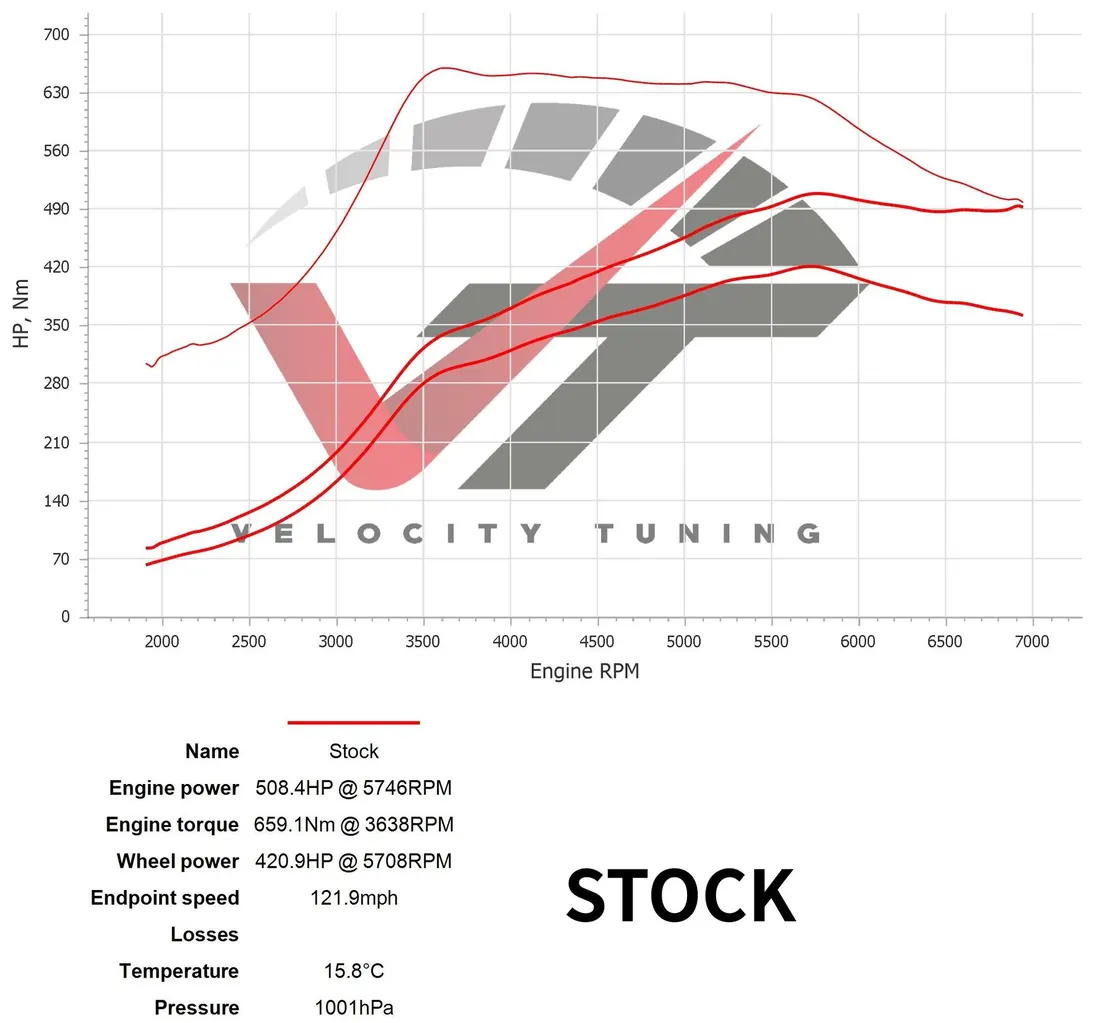 G80 M3 stock: 508.4 HP, 659.1 Nm
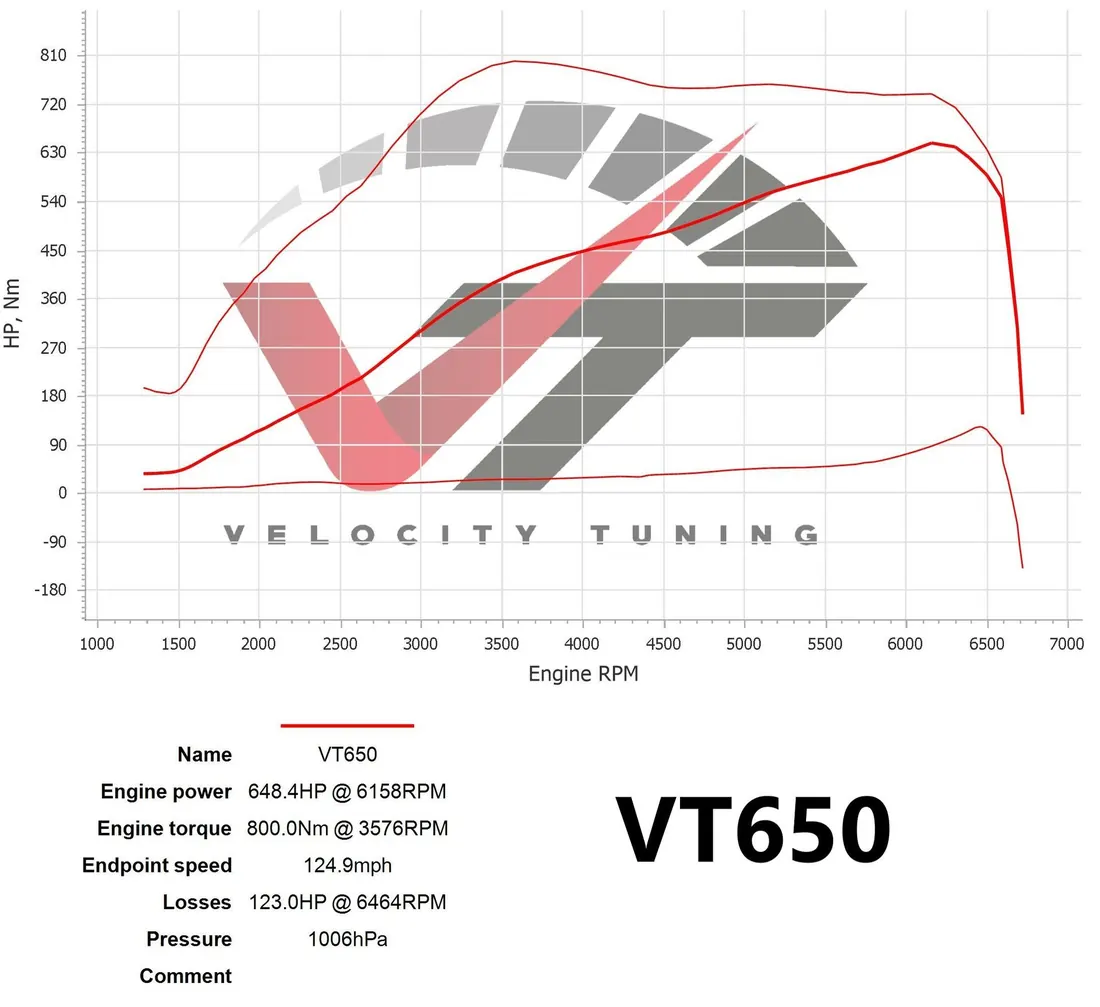 G80 M3 VT650: 648.4 HP, 800.0 Nm
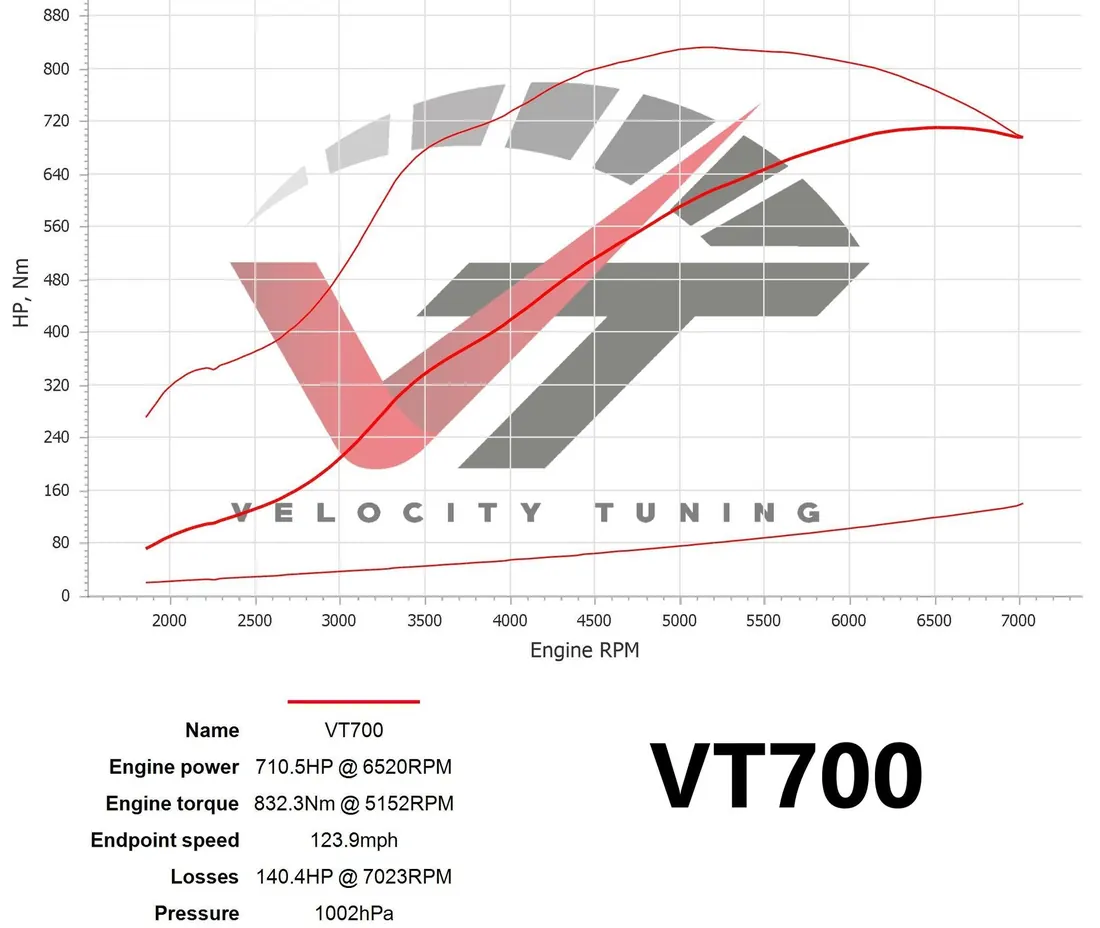 G80 M3 VT700: 710.5 HP, 832.3 Nm
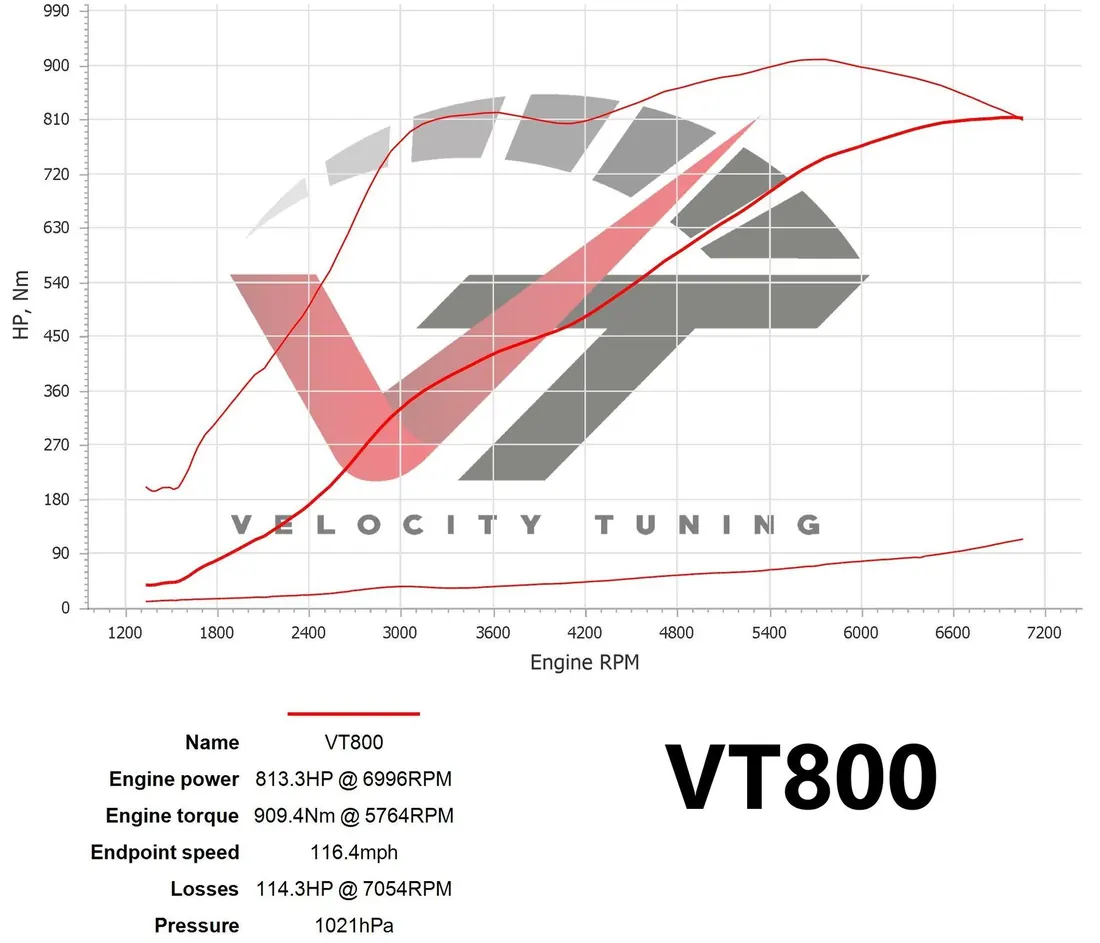 G80 M3 VT800: 813.3 HP, 909.4 Nm
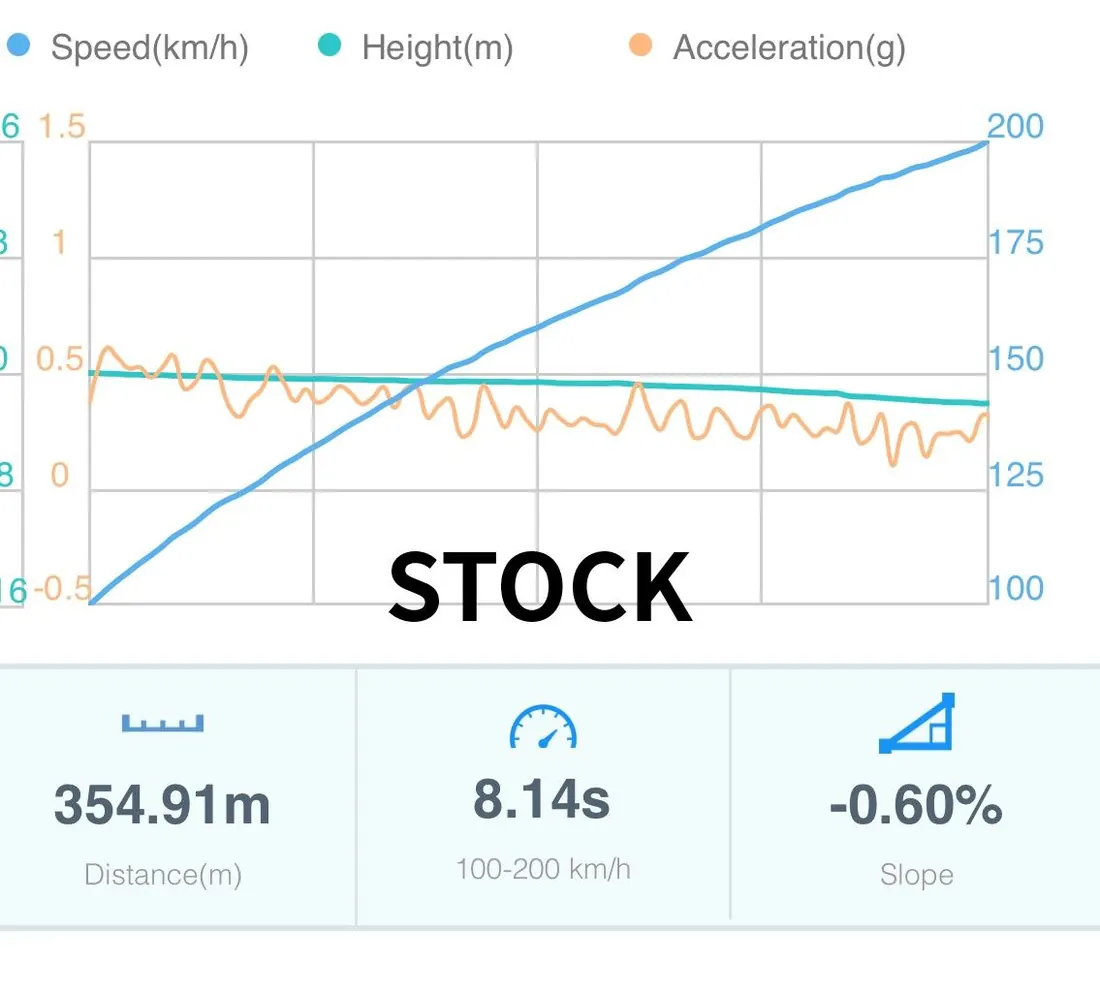 G80 M3 stock: 8.14 s 100-200 km/h
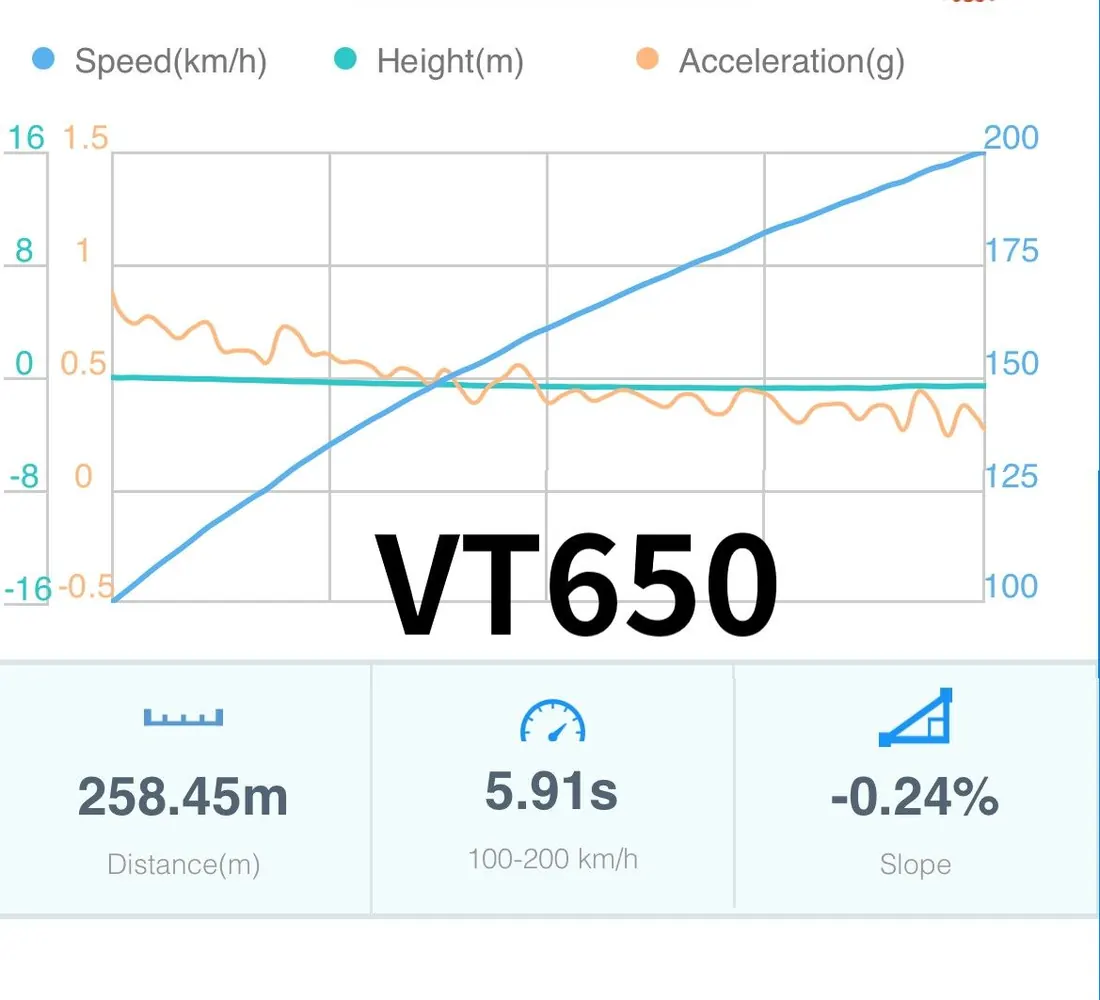 G80 M3 VT650: 5.91 s 100-200 km/h
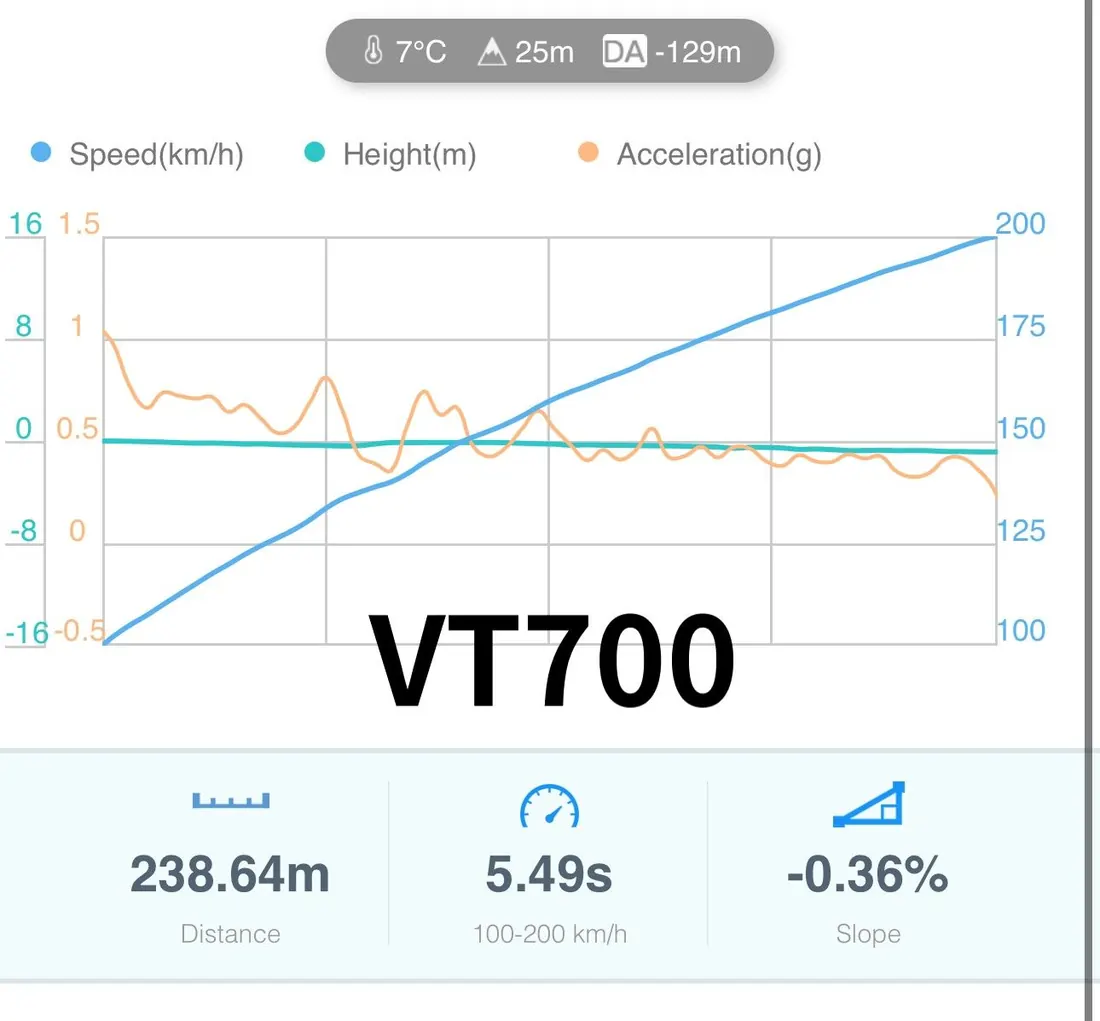 G80 M3 VT700: 5.49 s 100-200 km/h
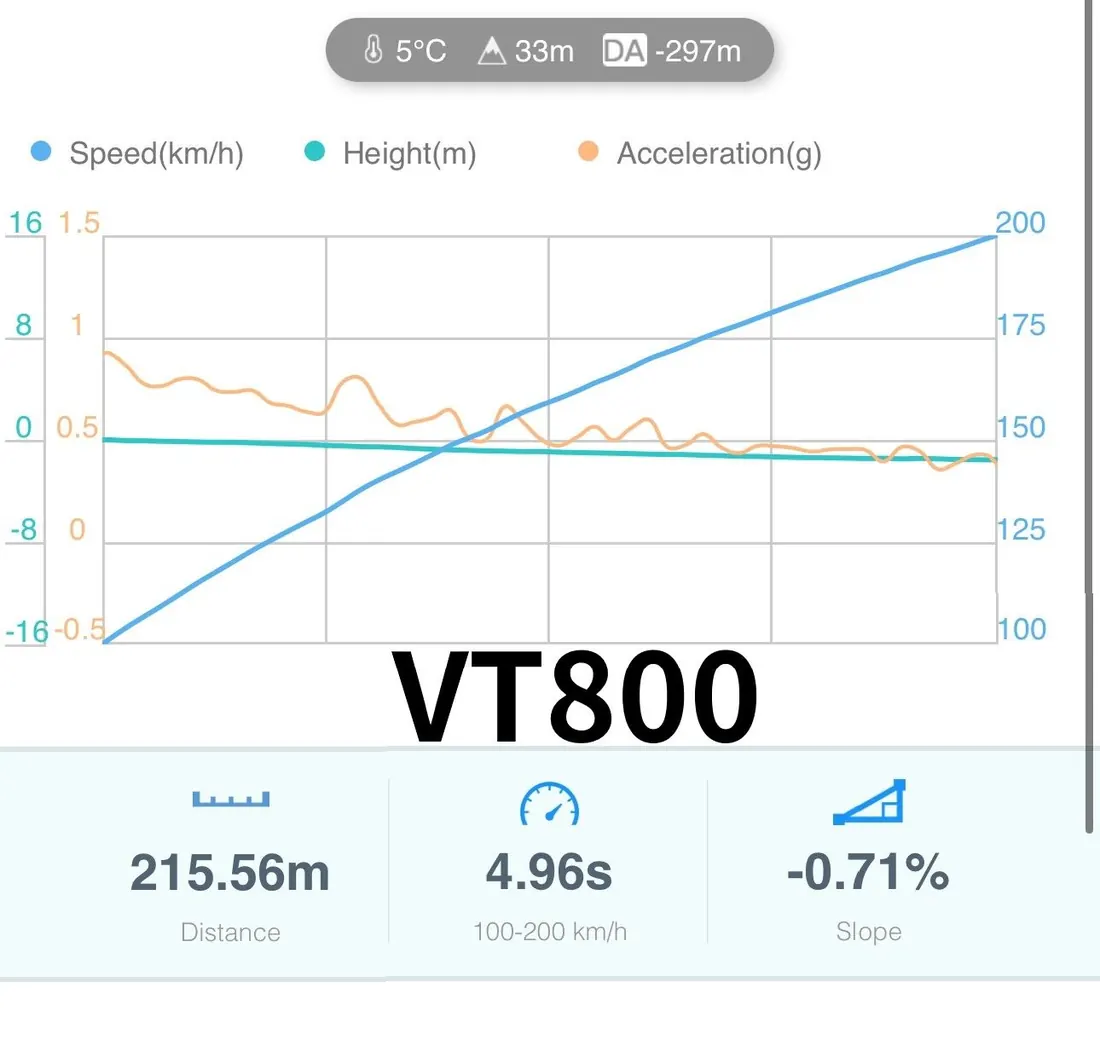 G80 M3 VT800: 4.96 s 100-200 km/h
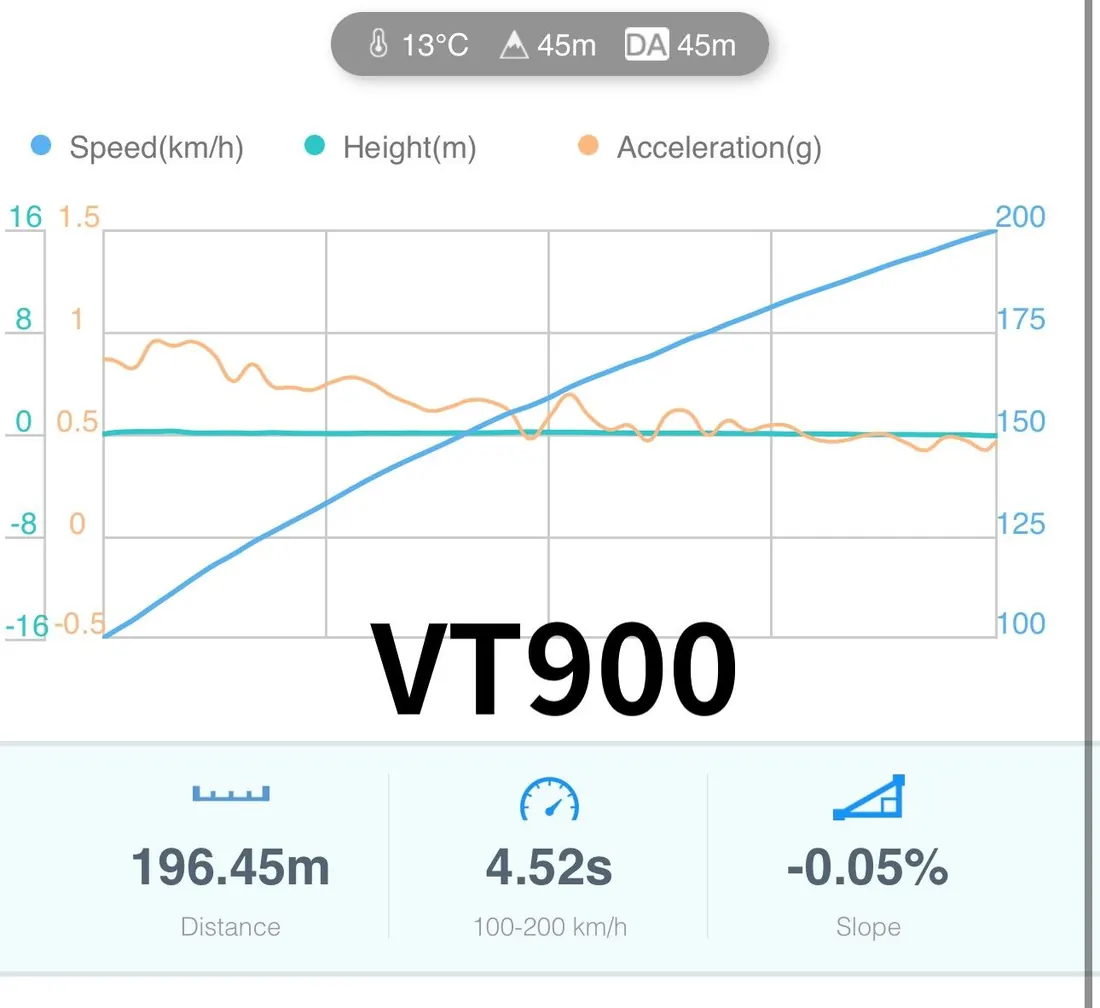 G80 M3 VT900: 4.52 s 100-200 km/h
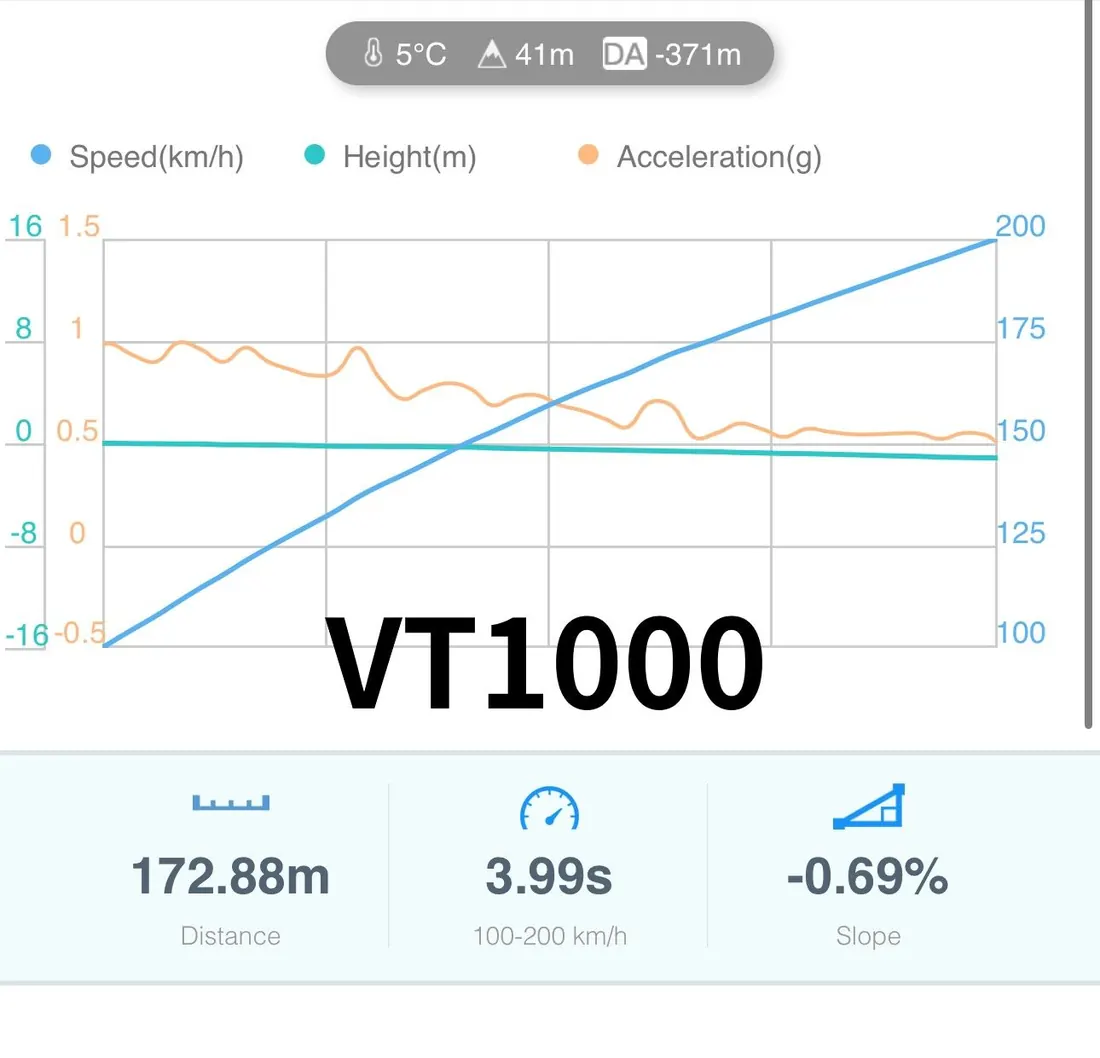 G80 M3 VT1000: 3.99 s 100-200 km/h
Typical figures by stage
| Stage | Power | Torque | 100-200 km/h | Needs |
|---|---|---|---|---|
| Stock | 500 to 515 BHP | 8.1–8.3 sec | ||
| VT650 Stage 1 | 620 to 640 BHP | 740 to 760 Nm | 6.0–6.2 sec | ECU flash only |
| VT700 Stage 2 | 695 to 720 BHP | 840 Nm | 5.5–5.7 sec | Exhaust modifications |
| VT800 Flex | 790 to 810 BHP | 890 Nm | 4.9–5.1 sec | Exhaust and flex fuel on 40% ethanol |
Ready for your S58?
Parts and servicing by car: